Forecast for the week of September 21st + Different types of weather instruments!!
By: Paige Klobucnik
Hi guys! I hope everyone is enjoying the 2nd half of September so far! Talking about the forecast this month has sounded like a lot of the same stuff, it's going to be hot, and it's going to continue to be hot. But yesterday, if y'all went out during the nighttime, there was a crisp fall breeze that I felt, yes, it was mostly due to the incoming storm that hit parts of the DFW area yesterday, but it still gave me some hope. I personally love the feeling of the air when it's about to rain, so I was super excited.
Looking at the rest of tonight, there is an increasing chance of storms, these are certainly going to be wildly scattered, so don't expect consistent rain, but storm clouds will appear and are sure to bring us at least some moisture and maybe some convection. Be prepared for some gusty winds when outside this evening. There is a cold front that is sticking to the north west of our region, but this is what is causing the chance for thunderstorm development throughout this frontal region. These storm chances shouldn't stick around for the rest of the night though, overnight should remain pretty dry. After tonight the rest of the week should stay pretty dry, with temperatures sticking around 5-10 degrees over the normal for the first week of astronomical fall (beginning Tuesday evening). Highs for the rest of the week will stick around the mid 90s, pushing into the high 90s during sunny afternoons.

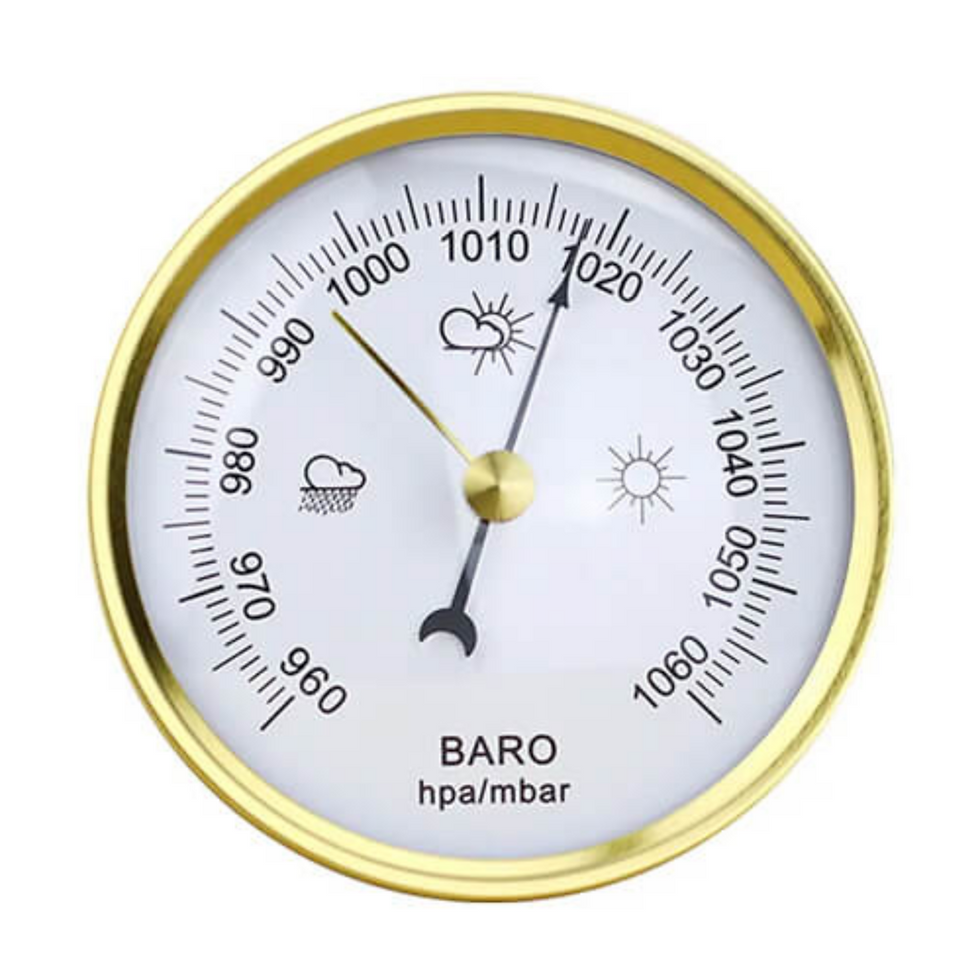
With discussing current conditions and thinking about future weather, it may be interesting to know how meteorologists measure different atmospheric variables. I wanted to take some time to talk about different weather instruments! The obvious one is thermometers, these are absolutely fundamental to weather observation. Thermometers are used to measure and record temperature of a particular region. Sensor technology has come a long way, so modern weather stations are equipped with resistance temperature detectors, thermocouples and semiconductor temperature sensors, rather than liquid thermometers. Essentially all of these detectors and sensors, they help with accuracy and stability, making temperature readings more accurate than traditional methods. Next we have barometers, these are instruments for measuring the pressure in the atmosphere, atmospheric pressure is also essential to forecasting, like a falling pressure reading typically signals incoming storms or rain, while rising pressure indicates clearing skies. Traditional barometers measure the pressure by using the movement of mercury, like an aneroid barometer, but in modern weather stations, digital barometers are used, also because of their increasing accuracy with improvement in technology. The last key weather instrument I wanted to talk about is hygrometers, these are used to measure the amount of moisture in the air, which is an important thing to consider because temperature and humidity are closely allied. Most weather stations today combine the measurement of both temperature and humidity into one temperature humidity sensor, which gives compact and accurate monitoring.

Thank you guys for reading! I hope you learned about different weather instruments, and now you can have more knowledge on how meteorologists measure current conditions to develop accurate forecasts! :)


Comments